


The Ultimate Guide to Barbell Bent-Over Row Alternatives
Introduction
The barbell bent-over row is a classic exercise that’s great for building a thick, muscular back and enhancing upper-body pulling power. However, it’s not suitable for everyone, especially those who struggle to maintain a solid hip hinge or experience lower back pain. If you’re one of them, don’t worry – there are alternative exercises that can help you achieve your fitness goals without compromising your back health.
What Makes the Barbell Bent-Over Row Effective?
The barbell bent-over row is a staple exercise in many workout routines because it:
PREMIUM PRODUCTS





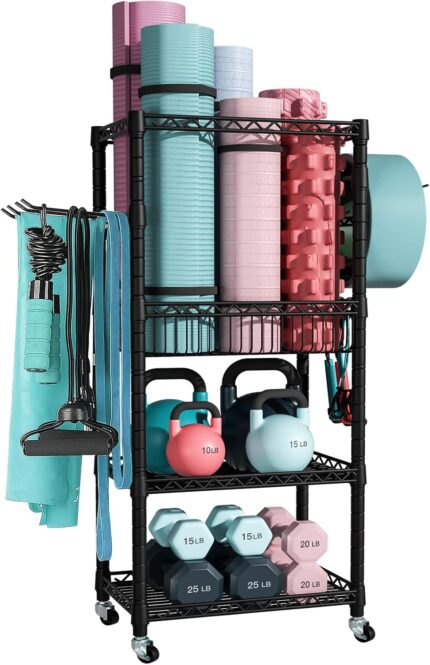
Home Gym Storage, 3 Tiers Workout Equipment Organizer with Wheels for Yoga Mats, Foam Roller, Dumbbells, Kettlebells, and Resistance Bands
Original price was: $139.99.$69.99Current price is: $69.99.- Targets multiple muscle groups: It works the lats, traps, rhomboids, and rear delts simultaneously, making it an effective exercise for building upper-body size and strength.
- Allows for heavy weights: The barbell’s stability enables you to lift heavy weights, which is essential for progressive overload and long-term strength gains.
- Reinforces hip hinge form: The bent-over position requires strength from the lower back and hamstrings, as well as core stability, which helps strengthen the same mechanics needed for deadlifts and Olympic lifts.
- Improves strength carryover: Getting stronger with the barbell bent-over row can improve your deadlift lockout and chin-ups due to the increased strength in your upper and lower back.
What to Look for in a Good Alternative
If the barbell bent-over row isn’t suitable for you, look for alternative exercises that:
- Target the right muscles: The goal is to hit your lats, traps, rhomboids, and rear delts.
- Mimic the same motion: Barbell rows involve pulling the weight at a horizontal angle, so a good alternative should maintain a similar motion.
- Are spine-friendly: A viable alternative should reduce unnecessary stress on the spine while allowing you to train hard.
- Allow for progressive overload: To achieve size and strength gains, you need an alternative that enables you to increase the weight or volume as you become stronger.
5 Alternatives to the Barbell Bent-Over Row
Here are five exercises that meet the criteria:
1. Chest-Supported Dumbbell Row
- How to do it: Lie face down on an incline bench and pull the dumbbells towards your hips, squeezing your shoulder blades at the top of the movement.
- Programming suggestions: 3-4 sets of 12-15 reps.
2. Seal Row
- How to do it: Lie flat on a bench with the weights below and pull the barbell or dumbbells towards your chest.
- Programming suggestions: 3-4 sets of 6-12 reps.
3. Meadows Row
- How to do it: Grip the bar with one hand at an angle and pull it across your body, creating a line of tension that challenges your back.
- Programming suggestions: 3 sets of 10-15 reps per side, focusing on a deep stretch at the bottom and a firm squeeze at the top.
4. Romanian Deadlift-Bent-Over Row Combo
- How to do it: Start with an RDL and then perform a bent-over row, training your lats, traps, and rhomboids.
- Programming suggestions: 3-4 sets of 6-12 reps, focusing on smooth transitions between the RDL and the row.
5. Stability Unilateral Bent-Over Row
- How to do it: Hold something secure while performing a unilateral bent-over row, challenging your lats, rhomboids, core, and glutes.
- Programming suggestions: 3 sets of 8-15 reps per side.
Conclusion
The barbell bent-over row is a great exercise, but it’s not the only option for building a strong back. By incorporating these alternative exercises into your workout routine, you can avoid putting unnecessary stress on your lower back while still achieving your fitness goals. Remember to focus on proper form and technique, and don’t be afraid to experiment with different exercises to find what works best for you.
FAQs
Q: What are the benefits of the barbell bent-over row?
The barbell bent-over row is a compound exercise that targets multiple muscle groups, including the lats, traps, rhomboids, and rear delts. It allows for heavy weights, reinforces hip hinge form, and improves strength carryover.
Q: Why might someone need an alternative to the barbell bent-over row?
Someone might need an alternative to the barbell bent-over row if they experience lower back pain, struggle to maintain a solid hip hinge, or have limited mobility.
Q: What are the key characteristics of a good alternative exercise?
A good alternative exercise should target the right muscles, mimic the same motion, be spine-friendly, and allow for progressive overload.
Q: How do I incorporate these alternative exercises into my workout routine?
Start by replacing the barbell bent-over row with one or two of the alternative exercises, and adjust the weight and volume based on your fitness level and goals. Be sure to focus on proper form and technique, and don’t hesitate to seek guidance from a qualified trainer or coach.